Home > Anti-Piracy > Site Blocking >
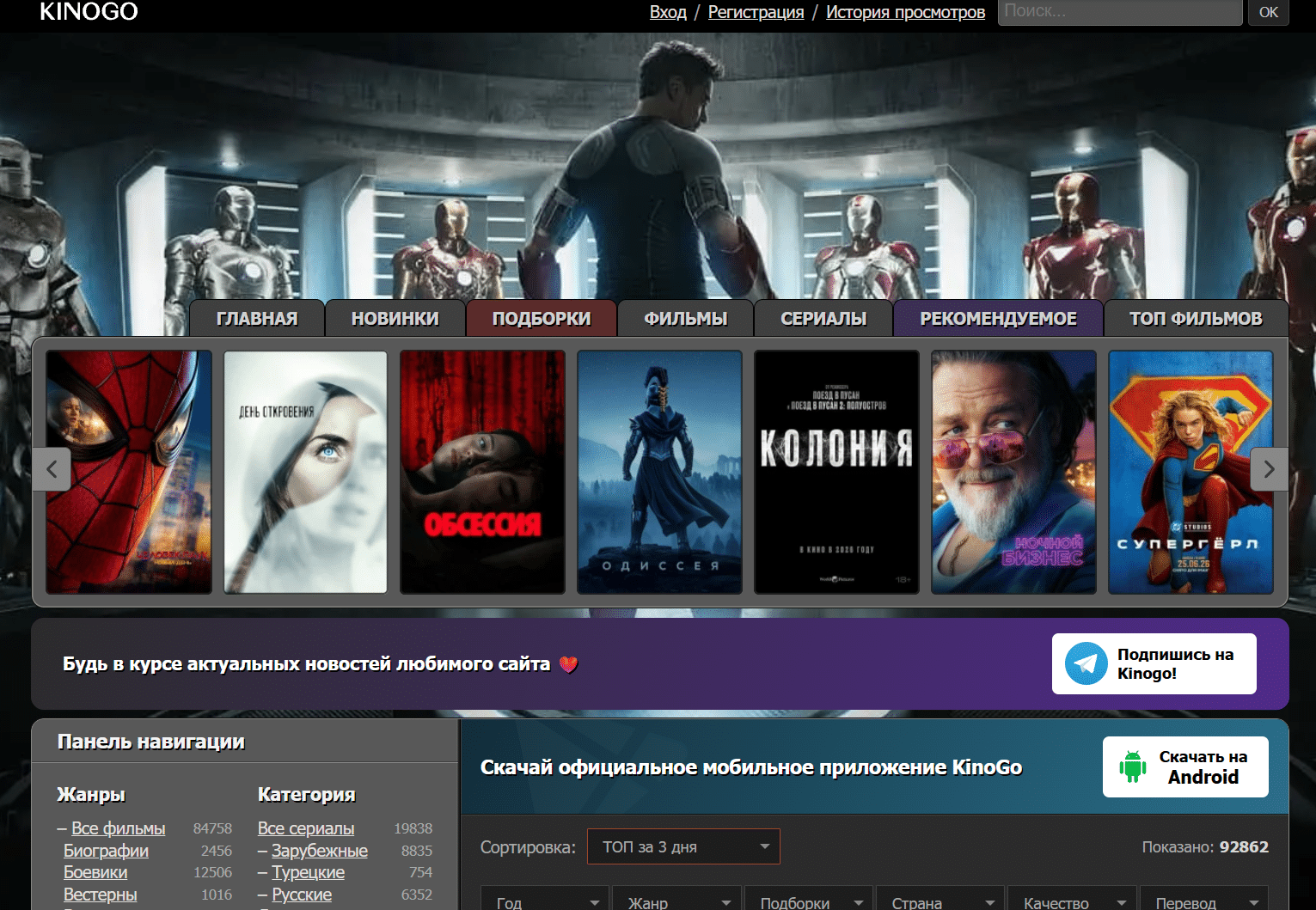
Germany doesn't have a hard benchmark for when a site is structurally infringing. However, the site-blocking clearinghouse CUII stated that illegal content clearly outweighs legal content when at least 81.5 percent of a site is infringing. After KinoGO was recently blocked with a floor of 82.4 percent, that line is closing in, raising the question of whether sites could simply pad their libraries with legal fillers.
Since 2021, major German Internet providers have agreed to block the country’s most egregious pirate sites through the Clearing Body for Copyright on the Internet, better known as CUII.
The system started as an administrative scheme without judicial oversight. CUII’s own committee issued blocking recommendations, and the Federal Network Agency signed off before providers acted.
This setup changed in mid-2025, when the stakeholders rewrote their code of conduct so that every block now starts with a rightsholder suing one ISP. Once a court confirms the block, the other providers follow.
CUII no longer issues the orders, but it will still communicate the recommendations to all participants. In recent weeks, the clearing body published several new ones based on orders from the Cologne Regional Court, targeting KinoGo and Streamed.
The court orders are not available to us, but according to CUII’s paperwork, these targets are classified as structurally copyright infringing websites, making the blocking orders “reasonable and proportionate.”
As is typical in Germany, the requesting rightsholders and the targeted domains are not mentioned. However, based on the brands and data from the independent transparency portal CUIIListe, streamed.pk, streamed.st, and kinogo.ec were all blocked in Germany this month.
CUII’s paperwork does reveal one hard statistic. For each site, a private investigator pulls a random sample of the site’s content, to see how much of it infringes at a 95.5 percent confidence level. This number is used to determine whether the target site is indeed ‘structurally’ infringing.
For example, for Streamed, the investigator put the infringing share somewhere between 96.16 and 100 percent. For KinoGo, meanwhile, between 82.4 and 94.6 percent of the content is pirated.
The 82.4 percent floor is the lowest we have seen so far, below all previous German blocking orders we have seen, including the ones below.
In a March 2025 order targeting HDFILME, STREAMCLOUD and FILMPALAST, CUII specifically stated when illegal content clearly outweighs the legal content on a site.
“The illegal content on the websites far outweighs the legal content. This is the case in any event when at least 81.5% of the website’s content is illegal,” the order reads, translated from German.
It is the only CUII order we found that puts a number on it. The figure traces back to the Cologne Regional Court, which set it in a January 2025 default judgment against the download portal NOX, a case the operator never contested. That same judgment triggered NOX’s own block.
In KinoGo’s example, the 82.4 percent floor is getting quite close to the 81.5 percent.
This percentage is not a hard benchmark for the court or for CUII to determine whether a site is blockable. However, one can imagine that it’s not a good look when it drops lower than that, especially when legal content would outweigh their pirated counterparts.
This doesn’t mean that KinoGo is a questionable target. The site has been a thorn in the side of rightsholders for many years. It has more than 50 million monthly visits, mostly from Belarus and Ukraine, which it has historically targeted.
The open question is how much of a site’s library has to be pirated before a block can be issued in Germany, and whether 81.5 percent is considered to be a general benchmark or just a figure tied to that one case.
If there is a fixed percentage, there are some obvious exploits that come to mind. In theory, an operator could pad an archive with public domain films or AI generated filler, pushing the investigator’s interval below the line while the pirated library stays intact.
We asked CUII whether the 81.5 percent can be treated as a fixed benchmark, but it has not responded by the time of publication. We will update this article if they do.
—
A copy of the Streamed order can be found here (pdf) and the KinoGo order can be found here (pdf). An archive of all CUII determinations is also available on the clearinghouse’s official website.
Source: Torrent Freak